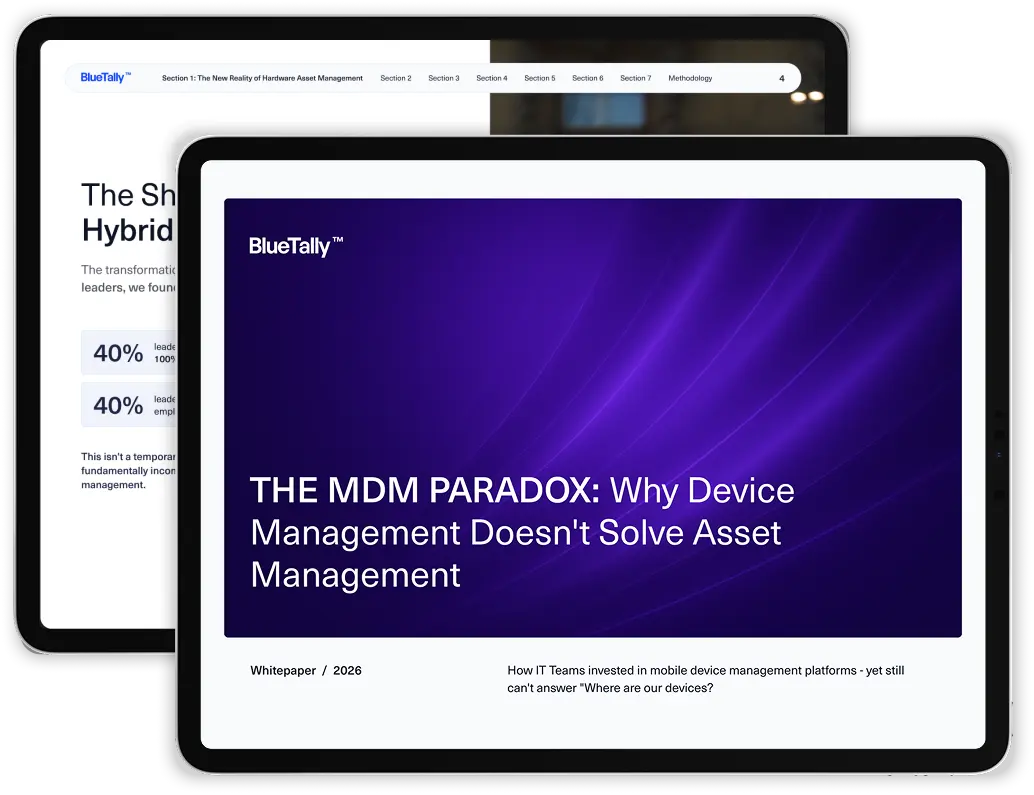
The MDM Paradox: Why Device Management Doesn't Solve Asset Management
Download our free whitepaper to learn why IT teams invested in mobile device management (MDM) tools, yet still can't answer "Where are our devices?" - and what to do about it.
What's Covered In This Whitepaper
How remote and hybrid work has fundamentally changed the challenge of tracking hardware. 40% of IT leaders surveyed manage fully remote workforces, and another 40% operate in hybrid environments - making legacy asset tracking approaches obsolete.
Why MDM tools like Intune, Jamf, and Iru - despite being excellent at security and configuration - leave six critical gaps in hardware asset management, from physical location tracking to warranty and lifecycle data.
Real stories from IT Directors about unrecovered devices, six-month equipment chases, and international recovery nightmares - costing organizations anywhere from a few thousand to $50,000+ annually.
How reactive lifecycle management leads to surprise replacements, wasted discovery time during migrations, and difficult budget conversations with finance teams.
Six consistent themes from IT Directors on what's missing - from a single source of truth and automated lifecycle planning to real-time device intelligence and cross-border support.
What high-performing IT organizations do differently, plus three concrete actions any IT leader can take to close the gap between device management and asset management.
Key Findings
1. MDM doesn't equal asset management
87% of organizations use device management platforms, yet many still can't produce a complete hardware inventory. MDM manages software, security, and configuration on enrolled devices. It doesn't track physical location, peripherals, user assignment during transitions, warranty status, or device recovery during offboarding.
2. Offboarding is the most expensive gap
IT leaders reported losing thousands to $50,000+ annually in unrecovered hardware. Remote work eliminated the simple "return it on your last day" model, and relying on employee compliance to ship equipment back fails often enough to be costly.
3. Lifecycle management is reactive, not strategic
IT teams discover end-of-life devices during migrations rather than planning proactively. One team spent more time on discovery than actual upgrade work during a Windows 10 to 11 migration because they didn't have accurate inventory data.
4. IT leaders want integration, not replacement
No one wants to rip out their MDM. They want a system that works alongside Intune, Jamf, or Iru to provide the asset management layer those tools don't offer - unified visibility, automated workflows, and lifecycle planning.
Who This Whitepaper Is For
IT Directors and Managers
You've deployed a MDM but still rely on spreadsheets to track hardware. You know there are gaps, and you need the data to make the case for a better approach.
IT Asset Managers
You're responsible for hardware visibility, lifecycle planning, and audit readiness. This report gives you aframework for evaluating where your current process breaks down.
CIOs and IT VPs
You need to understand the financial risk of poor asset visibility, from unrecovered hardware costs to unplanned capital expenditure from surprise replacements, and what it takes to fix it.
Finance and Operations Leaders
You want predictable hardware budgets and clean asset records for depreciation and financial reporting. This
report explains why that's harder than it sounds and what your IT team needs to deliver it.
Why We Wrote This Whitepaper
At BlueTally, we build IT asset management software for distributed teams. We talk to IT leaders every day who have the same frustration: they've invested in enterprise-grade MDM tools, but still can't answer basic questions about their hardware.
This report documents that gap - not to sell you on replacing your MDM, but to help you understand why device management and asset management are fundamentally different problems, and what it takes to solve both.

Frequently Asked Questions
What is the MDM paradox?

Who was interviewed for this whitepaper?
Is this whitepaper relevant if I don't use Microsoft Intune or Jamf?
What's the difference between device management and asset management?
How much does poor asset management actually cost?
Does fixing this mean replacing my MDM?
These resources may also be helpful
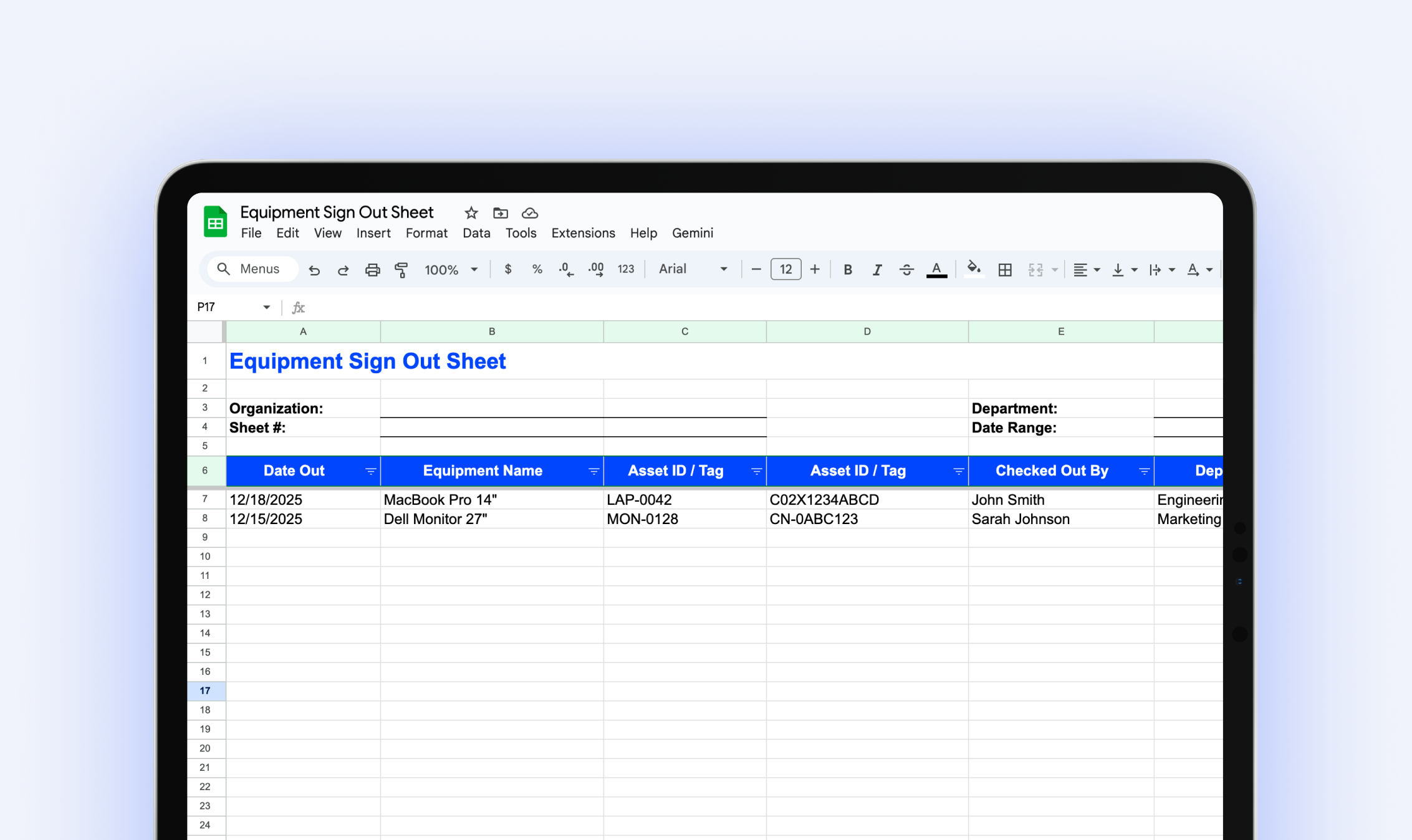
Equipment Sign Out Sheet
Download our free equipment sign out sheet to track who has what equipment, when it's due back, and what condition it's in when returned.
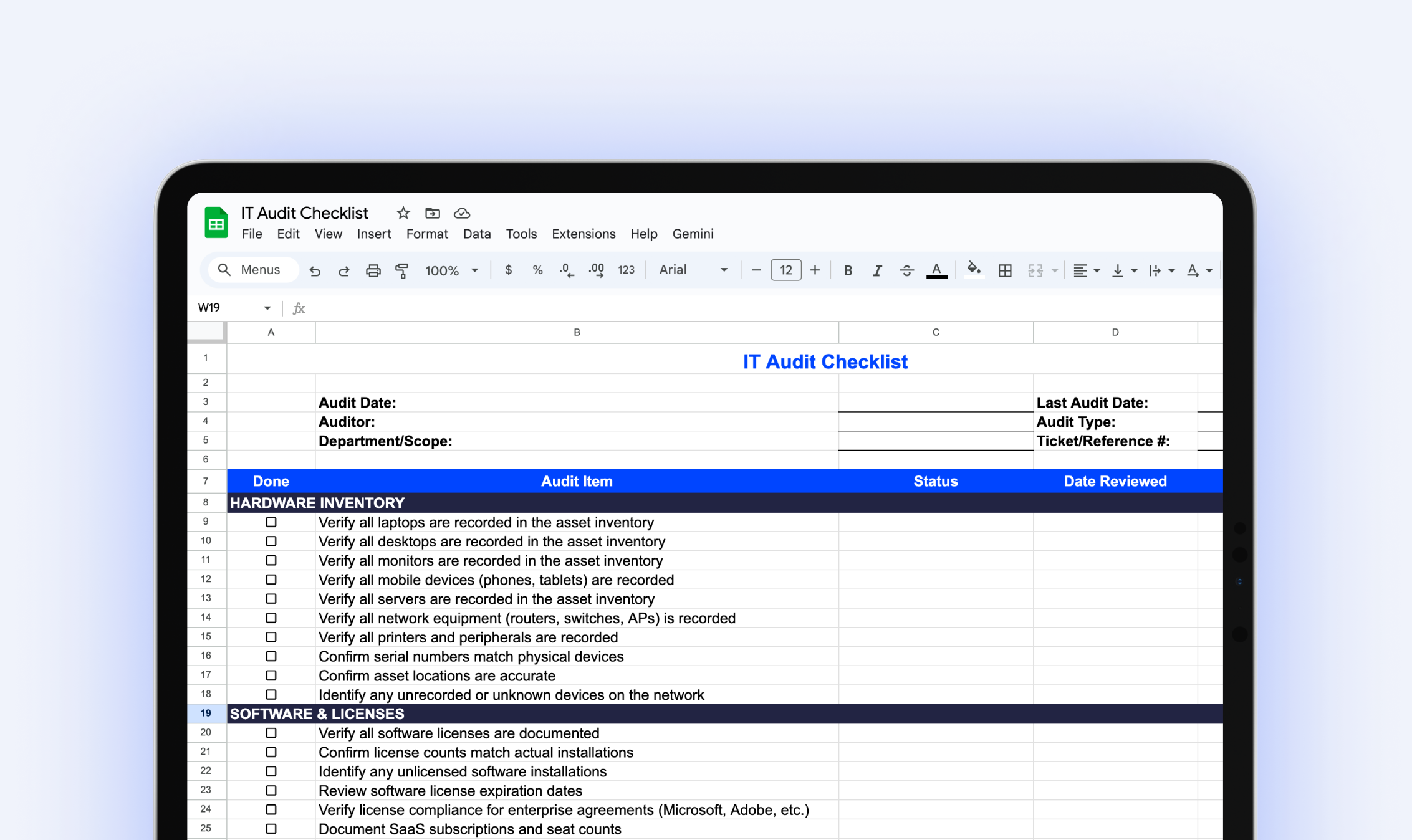
IT Audit Checklist
Download our free IT audit checklist to systematically review your hardware inventory, software licenses, user access, security controls, and IT documentation.
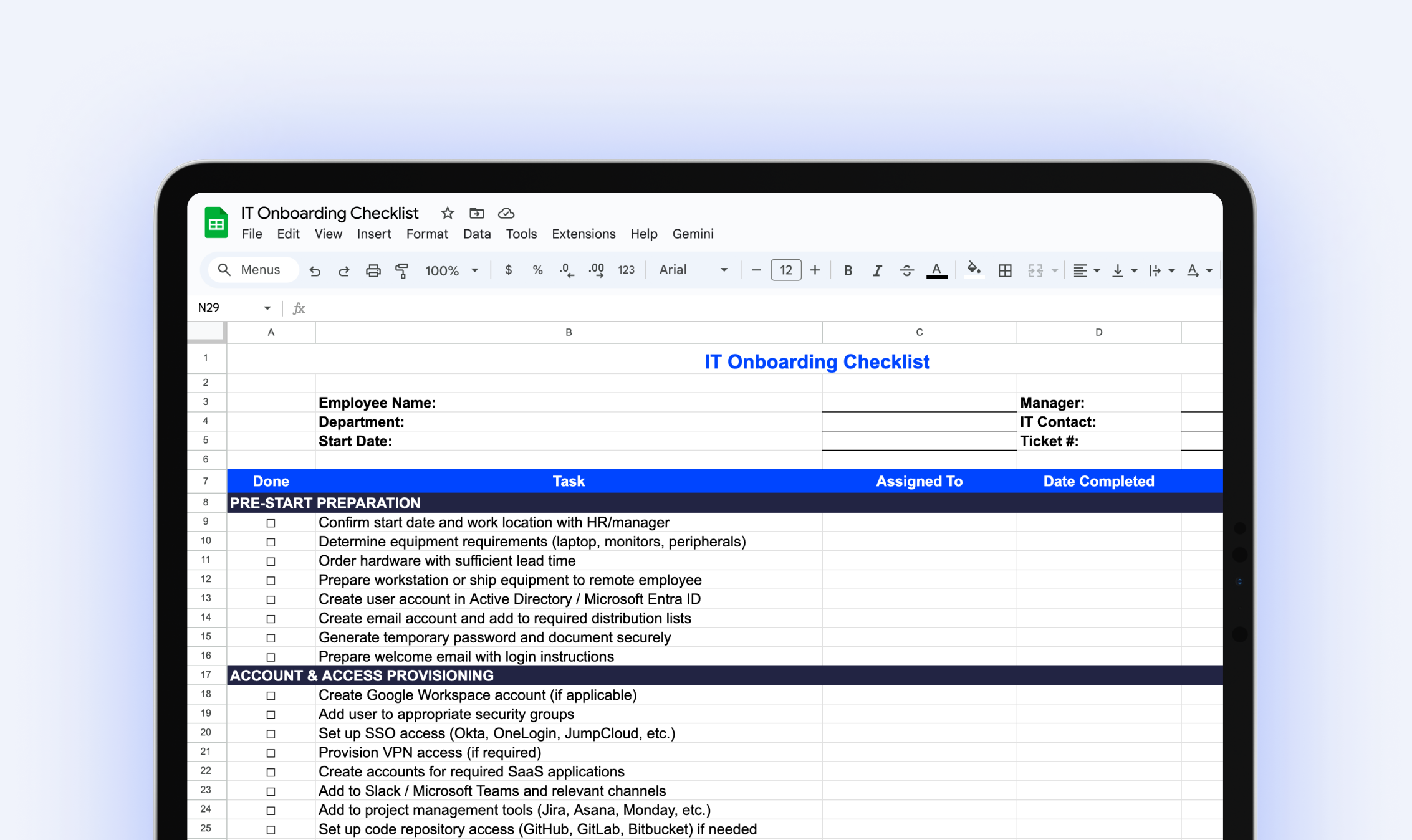
IT Onboarding Checklist
Download our free IT onboarding checklist to make sure every new hire has the accounts, access, and equipment they need from day one.
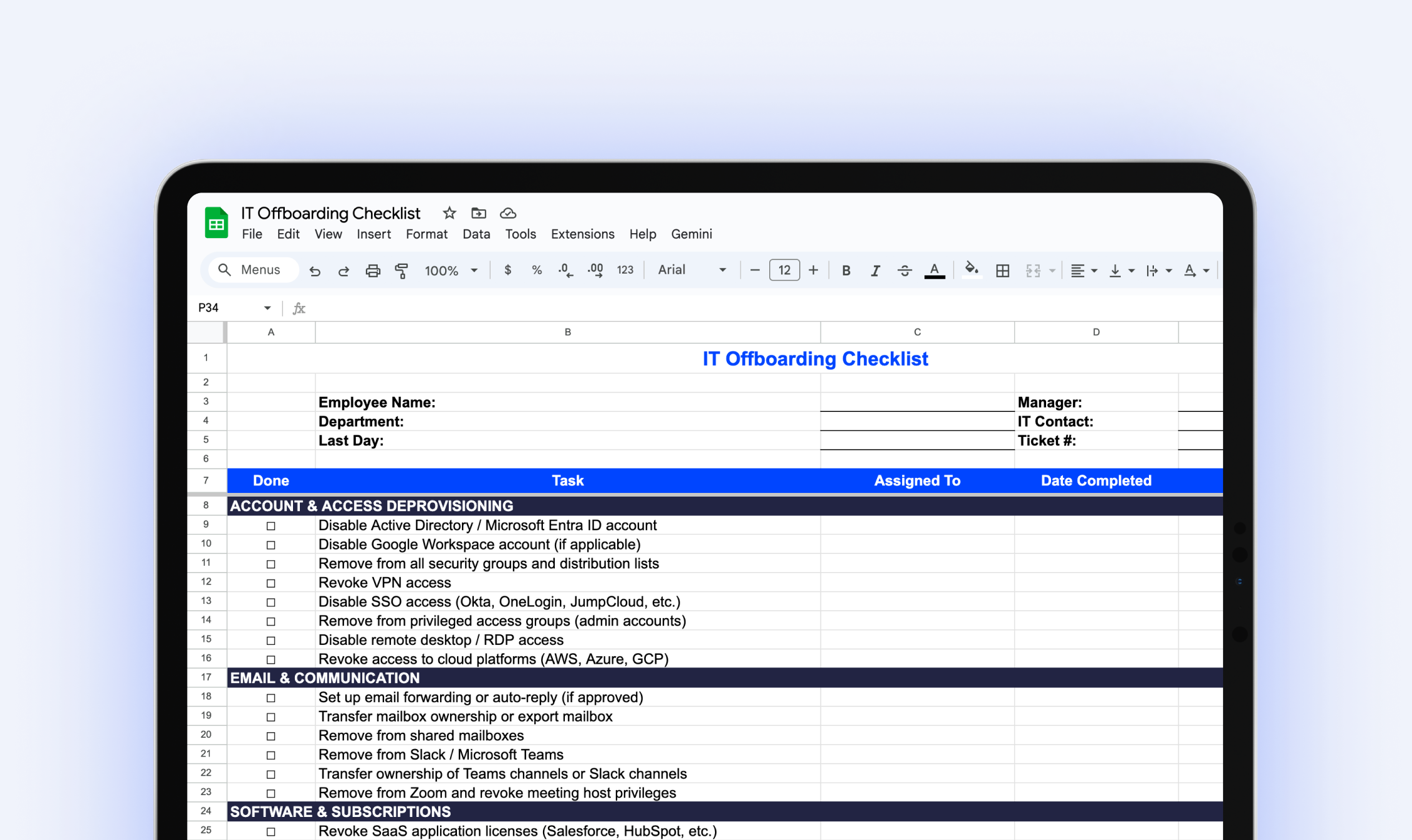
IT Offboarding Checklist
Download our free IT Offboarding Checklist and stay in control when an employee leaves, with clear steps to revoke access, recover equipment, and protect company data.
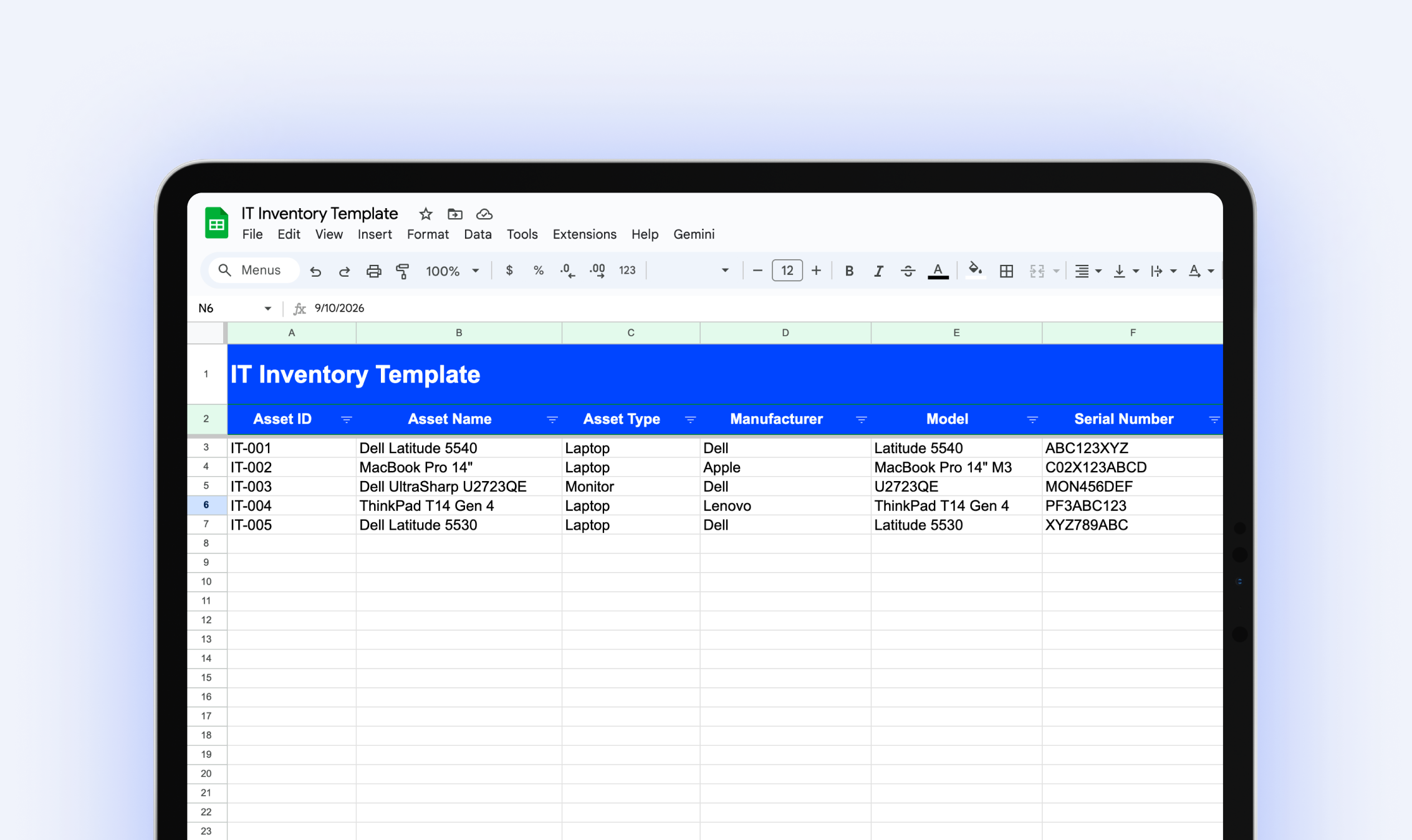
IT Inventory Template
Download our free IT inventory template to track all your organization's hardware, software, and equipment in one place.
.webp)
The IT Manager's Guide: 10 Asset Management Mistakes to Avoid
Download our free IT asset management guide to avoid common pitfalls, streamline tracking, and protect company assets.
Try it free for 14 days
Try BlueTally free for 14 days — the ITAM platform trusted by top IT teams. No credit card required.


